


What Actually Is Sports Psychology?
If you ask five different coaches what sports psychology actually means, you’ll probably get five completely different answers.
Some think it’s a generic motivational pep talk before a big game. Others think it’s a crisis management tool you only call in when an athlete completely loses their confidence. And a few still view it as a luxury reserved exclusively for the millionaire elite at the very top of professional sport.
At bMindful, we look at it differently.
With huge summer tournaments kicking off this month, from the launch of the Women’s T20 World Cup right here in England to the high stakes build-up for Men's FIFA World Cup, the physical and mental demands on athletes are clear for everyone to see.
But the hidden factor that will dictate who lifts trophies and who crashes out early isn't physical fitness. It’s what’s happening between their ears.
Let’s strip away the heavy academic jargon and break down exactly what sports psychology is, why it matters, how it actually works, and who it's really for.
What Sport Psychology Is: Mental Fitness
Think of sports psychology exactly like physical conditioning. You wouldn’t wait for an athlete’s muscles to completely waste away before sending them to the gym; you send them to the gym to build strength, resilience, and speed so they can compete at their best.
Sports psychology is mental conditioning. It is the structured practice of building a robust, flexible mindset. It’s not about sitting on a couch talking about your feelings for hours, and it’s certainly not about trying to force yourself to think positive when you’re 2 nil down against a side you should be comfortably beating on paper.
It is about teaching an athlete’s brain how to handle pressure, how to process mistakes in real time, and how to stay focused on execution when everything around them is chaotic.
Why It Works: The Science of High Performance
We don’t believe in luck, and we don't rely on hype.
Our approach at bMindful is grounded in proven, evidence based systems like Focused Acceptance and Commitment Therapy (FACT) and Positive Psychology.
When an athlete is under intense pressure, their brain's natural survival instinct is to panic. They start overthinking their physical movements, worrying about what the coach will say, or obsessing over a mistake they made two minutes ago. This mental traffic causes:
Physical tension
Ruins reaction times
Leads to unforced errors.
Our frameworks work by changing how an athlete relates to that pressure.
Instead of wasting energy trying to fight or deny their anxiety, we teach them how to acknowledge it, drop the mental weight of the last play, and rapidly anchor their focus back to the present moment.
How It Works: The Ecosystem
We don’t believe in putting an athlete in a sterile room, giving them a few generic tips, and sending them back to the club.
True, sustainable mental resilience doesn't happen in isolation.
Supported by former unified world champion, Natasha Jonas MBE.
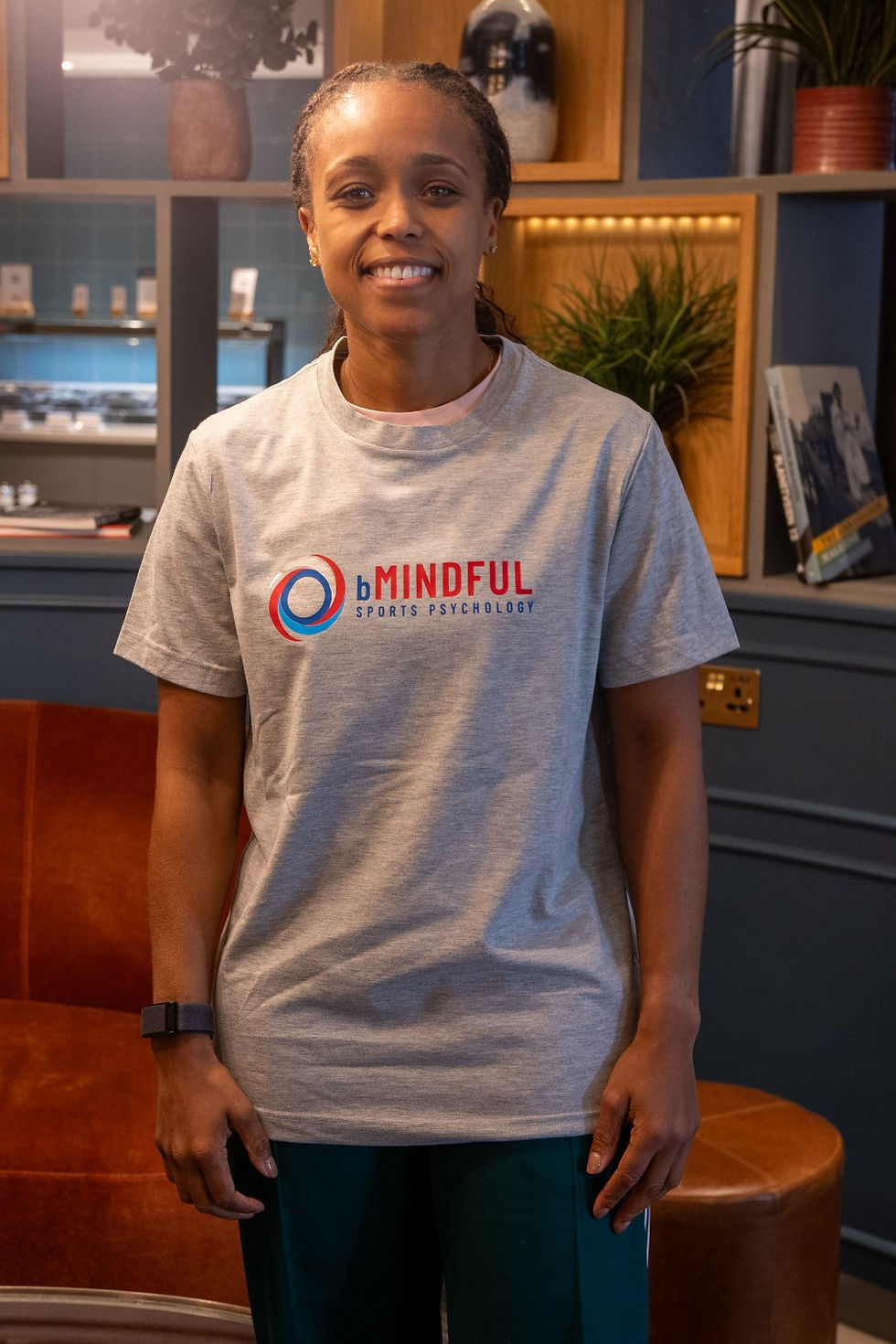
The bMindful system works by supporting the entire environment surrounding the athlete. We break our delivery down into three distinct layers:
For the Athletes: Practical, hands-on sessions (both 1 to 1 and team workshops) where we give them real, tactical tools to manage match-day stress, maintain confidence, and build bulletproof routines.
For the Coaches: We help management and coaching staff design what we call a Psychologically Informed Environment (PIE). This means setting up daily training habits, communication styles, and feedback loops that naturally foster resilience and keep young talent from burning out.
For the Parents: The journey home in the car is often where a young athlete’s mental game is won or lost. We provide parents with straightforward strategies to ensure the conversations at home perfectly align with the mindset work being done on the pitch.
So Who It Is For?
If your environment involves human performance, sports psychology is for you.
Specifically, our programmes at bMindful are built for:
Elite Youth Academies & NGBs: Who want to protect their investment in talent, maximise player retention, and prepare teenagers safely for the intense transition into senior sport.
Schools & Colleges: Looking to support dual-career student-athletes who are juggling the heavy pressure of academic results season alongside high-performance sports pathways.
Coaches & Managers: Who want to sharpen their communication style, reduce squad friction, and build an unshakeable team culture that holds together when the scoreboard goes against them.
Parents: Who want to navigate the competitive sports pathway safely alongside their children, ensuring they love the game just as much at age 18 as they did at age 8.
The Bottom Line
At the elite level, everyone can run, everyone can pass, and everyone has tactical awareness. The physical margins are razor thin.
If you're leaving the psychological development of your players or your coaching staff entirely to chance, you're leaving your performance to chance.
Mental toughness is an asset that is built, day by day.
Want to see how your current setup scores on the mental performance scale?
Get in touch with the team today to see how we can support your club, school, or academy this season. Call 0161 510 0111 or email enquiries@bmindfulpsychology.co.uk


Comments